DIRECTOR’S CUT WORLD CINEMA
Nollywood’s Quiet Takeover: How Nigeria Built the World’s Second-Busiest Film Industry, and What It Does Next
Billion-naira box office records, a YouTube revolution and a December release window that never misses. Why Nigerian cinema is the most underrated story in world film.
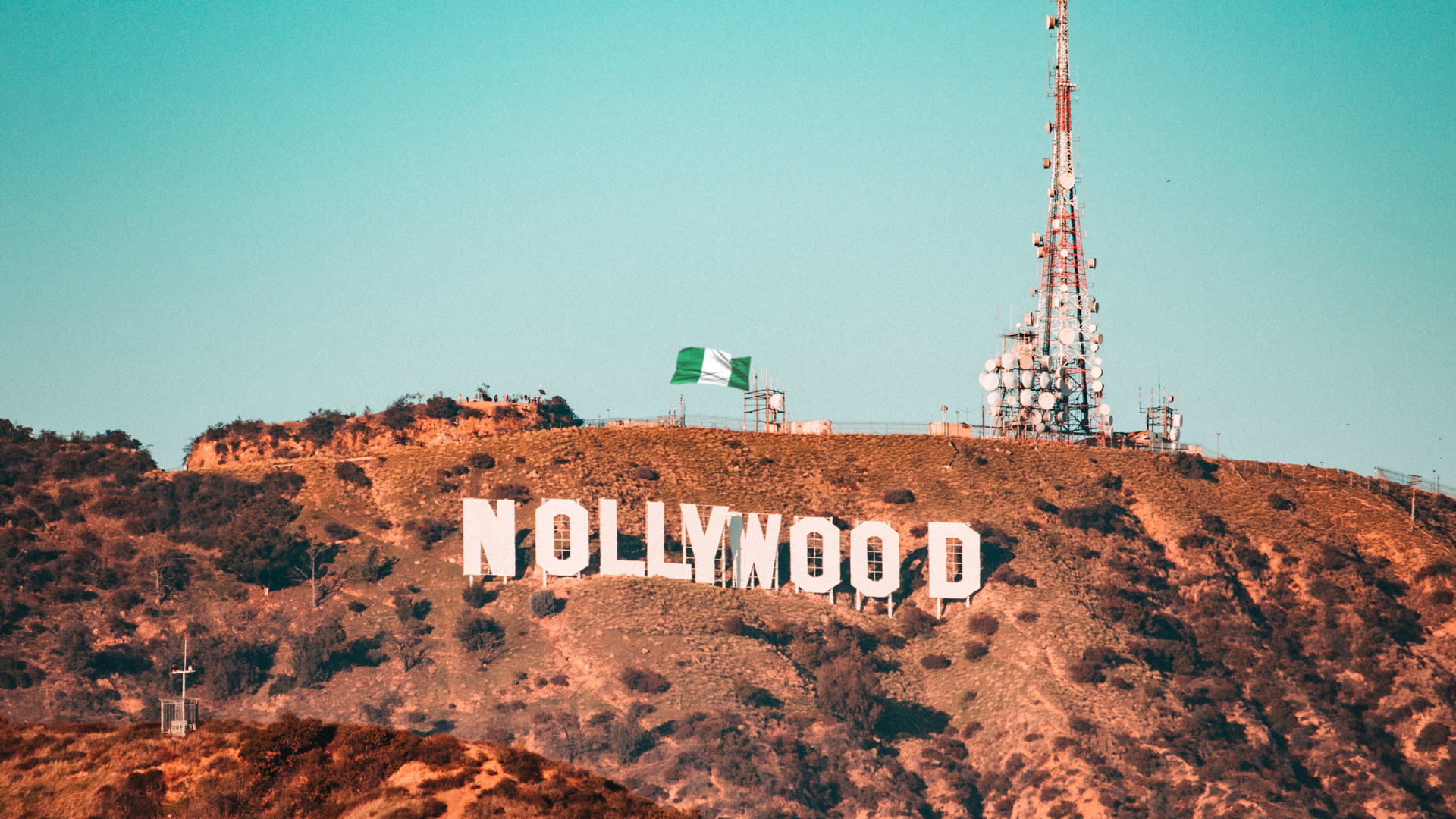
Nigeria makes more films than Hollywood. Its biggest hits now gross billions of naira, its filmmakers are building audiences of millions on YouTube, and when the global streamers pulled back, the industry barely blinked. Here is how Nollywood got here, and why the rest of the film world should be paying attention.
The short version
Nollywood makes around 2,500 films a year, second only to India. Funke Akindele’s Behind the Scenes became the first Nigerian film to pass ₦2 billion, Call of My Life is the biggest hit of 2026, and after Netflix and Prime Video scaled back, many filmmakers moved to YouTube, where they keep their rights and reach the world directly.
The numbers most people get wrong
Ask most film fans to name the world’s second-biggest film industry and they will say Hollywood. By one important measure, they are wrong. In 2009, a UNESCO survey of global film production counted 872 Nigerian feature productions in 2006, against 485 major films from the United States. Only India made more. The report also found that more than half of Nigerian films were made in local languages such as Yoruba, Hausa and Igbo rather than English.
The figure has only grown since. Most estimates now put Nollywood’s output at around 2,500 films a year, roughly 50 a week. Measured by money, it is a different story, and we will come to that. But by sheer volume, Nigeria is a filmmaking superpower, and most people outside Africa have never seen a single one of its films.
| Nollywood at a glance | |
|---|---|
| Films per year | Around 2,500 (estimates vary) |
| Global rank by volume | Second, behind India |
| Biggest film ever | Behind the Scenes (2025), over ₦2.1 billion in Nigeria |
| Biggest film of 2026 | Call of My Life, about ₦900 million |
| Fastest-growing outlet | YouTube |
From market stalls to multiplexes
Nollywood did not grow out of studios. It grew out of markets. In the early 1990s, Nigerian producers started shooting films cheaply on video and selling them on cassette, and later on VCD, through traders in Lagos and Onitsha. Living in Bondage, a 1992 supernatural drama about a man who sacrifices his wife for wealth, is usually credited as the film that turned the trickle into an industry. It sold in huge numbers and proved there was a mass audience for stories that looked and sounded like Nigerian life.
What followed was one of the most extraordinary production booms in film history. Films were shot in a week or two, on budgets that would not cover a day of catering on a Hollywood set, and released straight into the hands of viewers. The quality was uneven, to put it kindly. But the speed and the volume built something no amount of investment can buy: an audience that trusted Nollywood to tell its stories.
The 2010s brought a second wave. Modern multiplexes opened in Lagos, Abuja and other cities, and a generation of filmmakers began making polished, cinema-ready films with bigger budgets and better craft. Kemi Adetiba’s 2016 comedy The Wedding Party showed that a Nigerian film could become a genuine box office event, and it set a record that stood for years.
The Funke Akindele effect
If one person has defined Nigerian cinema in the past five years, it is Funke Akindele. The actor, writer, director and producer has turned December into her personal release window and broken the national box office record again and again.
Her 2023 film A Tribe Called Judah became the first Nollywood title to cross ₦1 billion. Everybody Loves Jenifa pushed the record to ₦1.88 billion in 2024. Then Behind the Scenes, released in December 2025, closed at more than ₦2.1 billion in Nigeria, the first Nollywood film ever to pass ₦2 billion. According to Nairametrics, her three December films have taken a combined ₦5.39 billion, making her, by the available records, Africa’s highest-grossing filmmaker.
She is not stopping. Her next film, The Four: No One Fights Alone, a drama about friendship and resilience with an ensemble that includes Richard Mofe-Damijo, Bisola Aiyeola and Chioma Akpotha, opens in cinemas on 11 December. Whether it beats Behind the Scenes will be one of the most closely watched box office races in Africa this year.
There is a lesson here for any producer. Akindele has done what Hollywood studios spent decades trying to do with tentpole dates: she has trained her audience to expect her. Every December, there is a Funke Akindele film, and every December, people go. Consistency is a marketing strategy in itself.
2026: the year the records spread out
The most encouraging thing about Nollywood’s 2026 is that the success is no longer limited to one filmmaker or one month. Call of My Life, a romantic comedy directed by first-timer Dammy Twitch and released in May, a month that has traditionally been quiet for Nigerian cinema, finished as the biggest Nollywood film of the year at around ₦900 million. It is now the highest-grossing romantic comedy ever released in Nigeria.
It was not alone. In January, Toyin Abraham’s holiday release Oversabi Aunty became the first directorial debut in Nollywood history to pass ₦1 billion. Ikenga: The Last Festival became the most successful Igbo-language film ever. The faith-based Agbara Nla: The Return, released in October, set a new first-day record. And Onobiren: A Woman’s Story became one of the year’s surprise hits, a drama about women made by a producer who is not an actor, in a market that usually depends on star power.
Taken together, these films show an industry that is broadening, not just growing. Different genres, different languages, different release dates and new directors are all finding audiences. That is the sign of a healthy cinema culture rather than a one-woman phenomenon.
A note on the money
Before anyone gets carried away, it is worth being honest about scale. Nigerian box office figures are reported in naira, and the naira has lost much of its value against the dollar in recent years. A ₦2 billion record sounds enormous, and in Nigeria it is. In dollar terms, it is closer to the opening weekend of a modest independent film in the United States.
That gap matters. It limits budgets, it limits salaries, and it is one reason why Nigerian films still struggle to compete on production values with the global content that fills streaming platforms. Piracy remains a serious problem too, as it has been since the market-stall days. Nollywood’s achievement is not that it has matched Hollywood’s revenue. It is that it has built a self-sustaining industry from almost nothing, for an audience that the global studios largely ignored.
When the streamers pulled back
For a few years, it looked like the global streamers would transform Nollywood. Netflix launched in Nigeria in 2016 and began buying and commissioning Nigerian films and series. Genevieve Nnaji’s Lionheart became the first Netflix original film from Nigeria, and later titles such as Blood Sisters and The Black Book reached audiences around the world. Amazon’s Prime Video followed with licensing deals with leading Lagos production companies.
Then the money slowed down. In 2024, Prime Video laid off its Africa staff and stopped funding original content in the region, while Netflix said it would no longer commission Nigerian films, although it would continue to license them, according to Forbes Africa. For filmmakers who had built their plans around streaming deals, it was a shock.
It is a familiar story to anyone who works in production. Streaming money pours into a territory, raises costs and expectations, and then moves on when the global strategy changes. We have seen the same pattern in Los Angeles itself, where the end of the streaming boom has left soundstages empty, as we explored in our piece on Netflix’s stalled Radford Studio deal.
The YouTube revolution
What happened next is the most interesting part of the story. Instead of waiting for the streamers to return, many Nigerian filmmakers went straight to YouTube.
The leading example is Omoni Oboli, one of Nollywood’s best-known actors and directors. Her channel, launched in December 2023, became a hit with the romantic drama Love in Every Word, which drew more than 20 million views in its first three months, and it was named YouTube Nigeria’s top creator channel of 2025. Others, including Ruth Kadiri and Biodun Stephen, have built similar businesses.
The model is simple and, for many producers, more attractive than a streaming deal. Films are made for less money, the filmmaker keeps ownership of the rights, and the audience is global from day one, which matters for a Nigerian diaspora that often cannot see films licensed to streamers only in Africa. An NPR report found YouTube producers paying actors several million naira for a few days’ work, rates that many cinema producers will not match, and established stars who once looked down on YouTube films now making them.
In a sense, it is Nollywood going back to its roots. The VHS era worked because filmmakers sold directly to viewers. YouTube is the same idea, with a worldwide market stall and no middleman taking the rights.
What the rest of the industry can learn
From where we sit, on the production side, Nollywood offers some lessons that the rest of the industry would be wise to take seriously.
Own your audience. Hollywood has spent the past decade handing its relationship with viewers to a handful of streaming platforms. Nollywood’s YouTube filmmakers have done the opposite, building direct relationships with millions of viewers who subscribe to them, not to a service.
Make release dates mean something. Funke Akindele’s December films have become an event because they are consistent. In a crowded market, predictability is a strength, not a weakness.
Budget for the audience you have. Nigerian producers have always made films that can pay for themselves in their home market. That discipline is exactly what many larger industries lost during the streaming boom, when budgets were set by platforms rather than by what a film could realistically earn.
Local language travels. Some of 2026’s most notable Nigerian hits were not in English, just as foreign-language films keep breaking records elsewhere. Look at Godzilla Minus Zero’s record American opening. Audiences are far more willing to read subtitles than the industry used to believe.
Our take: the most underrated story in world cinema
Nollywood rarely makes the front page of the trade press in London or Los Angeles, and when it does, the story is usually about volume or about the streamers. That misses what is really happening. Nigeria now has a cinema industry that breaks its own records every year, a generation of filmmakers who own their work and reach audiences directly, and a home market that has proved it will turn up for its own stories.
It still has serious problems to solve: piracy, a weak currency, thin margins and uneven quality. But it has something the rest of the industry is struggling to find, which is confidence that its audience will come. As Hollywood worries about where its next generation of viewers will come from, it might want to watch what Lagos does next. The answer to that question may already be playing on a YouTube channel with a few million subscribers.
Questions readers keep asking
What is Nollywood?
Nollywood is the name for Nigeria’s film industry. It began in the early 1990s with low-budget films sold on video and now produces around 2,500 films a year.
Is Nollywood bigger than Hollywood?
By number of films made, yes. A 2009 UNESCO survey ranked Nigeria second in the world for film production behind India. By revenue, Hollywood is still far larger.
What is the highest-grossing Nollywood film?
Funke Akindele’s Behind the Scenes (2025), which grossed more than ₦2.1 billion in Nigeria, the first Nollywood film to pass ₦2 billion.
What is the biggest Nollywood film of 2026?
Call of My Life, a romantic comedy directed by Dammy Twitch, which grossed around ₦900 million after its May release.
Why are Nollywood films on YouTube?
After Netflix and Prime Video scaled back their Nigerian commissions, many filmmakers began releasing films directly on YouTube, where they keep their rights and reach a global audience.
What is Funke Akindele’s next film?
The Four: No One Fights Alone, which opens in cinemas on 11 December 2026.
Your review
Seen it, or got a view on the news? Tell us what you think. Reviews are checked by our team before they appear.